



Setting up a bird feeder is one of the most rewarding ways to bring vibrant life, song, and colour into your garden. While welcoming wild birds is a joy, a busy feeding station can sometimes bring a few unexpected surprises, whether that’s an overly ambitious squirrel, a bit of messy seed on the patio, or larger garden birds hogging the treats.
Luckily, these minor hiccups are easily fixed with a few smart tweaks! From choosing the right bird food to placing your bird feeders in the ideal spot, here’s our complete guide to keeping your feeding station safe, tidy, and bursting with happy songbirds.
How to deter unwanted pests & rodents
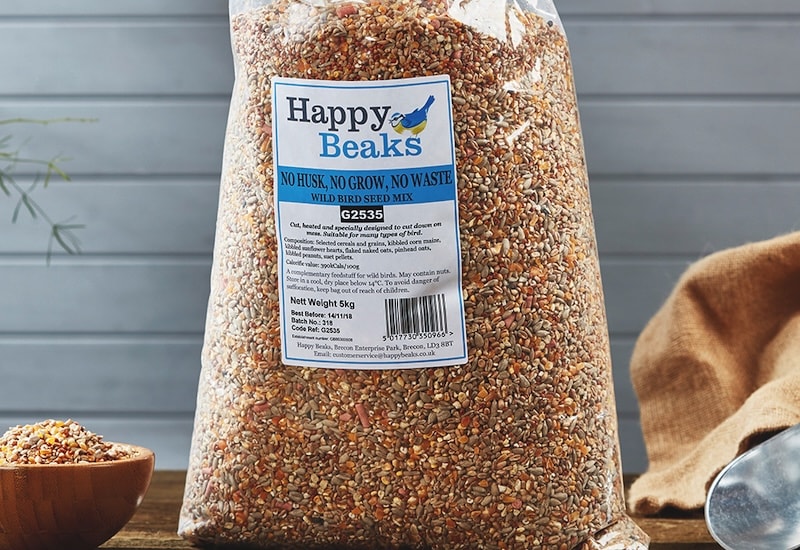
Image: No Husk No Grow No Waste Wild Bird Seed Mix from Happy Beaks (© T&M)
No matter your opinion of wild mice and rats, their presence around feeders can pose a risk. Rodents carry diseases that can easily contaminate bird food through droppings and urine. Because they’re opportunists, your feeder is essentially an all-you-can-eat buffet. Here are some easy ways to deter rodents:
- Switch to ‘No-Mess’ Feeds: Use husk-free seed mixes or suet blocks. Birds eat the entire morsel, meaning far less waste drops to the ground to attract scavengers.
- Tidy Up Daily: Catch falling seeds by adding a tray underneath your feeders or laying down a catch-mat. Sweep up fallen debris before dusk, as rats are primarily nocturnal.
- Feed in Moderation: Only put out enough food for the birds to consume during daylight hours so there are no midnight leftovers.
- Store Food Safely: Keep all bird food stored in airtight metal or heavy-duty plastic bins to prevent pests from chewing through the packaging.
- Take a Feeding Break: If you spot unwanted rodents, remove your feeders completely for 1 to 2 weeks. Once their food source disappears, they’ll move on.
BTO Tip: They suggest we “dispose of uneaten food as waste, not into parts of the garden where wildlife may still access it.”
Find more tips on how to deter mice and rats from your feeders here.
How to deter feeder bullies and squirrels
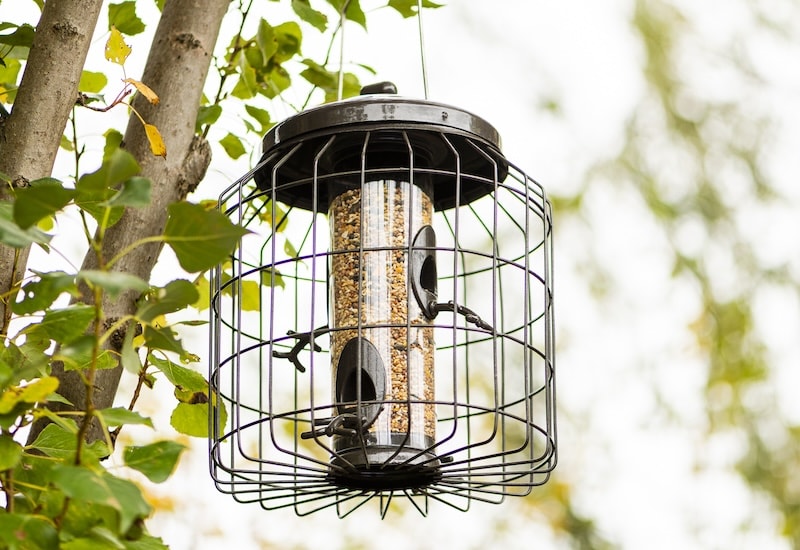
Image: Heavy Duty Squirrel Proof Seed Feeder from Happy Beaks (© BGP)
Pigeons, starlings, and grey squirrels can quickly dominate feeders, devouring expensive food in minutes and scaring off smaller songbirds like goldfinches and coal tits. Here are some ways to put them off:
- Get Squirrel-Proof Feeders: Invest in feeders surrounded by a metal cage or a weighted mechanism. These allow small birds in while shutting out squirrels and large birds.
- Add Baffles: Fit a smooth, wide plastic dome (a baffle) above hanging feeders or midway up a feeding station pole. This creates a physical barrier squirrels can’t cross.
- Try Spicy Seed: Mammals (like squirrels and mice) are sensitive to capsaicin (the chemical in chilli), whereas birds can’t taste it at all. Dusting your bird seed with mild chilli powder deters mammals without harming birds.
- Try Niger Seed: Small birds like goldfinches love niger seeds, but squirrels and larger birds generally ignore them.
RSPB Safety Tip: Never grease feeder poles to stop squirrels or rats. The grease could transfer to birds and it “sticks to feathers and stops them from being waterproof”.
Find more tips on how to squirrel-proof your bird feeders here.
How to prevent disease through better hygiene
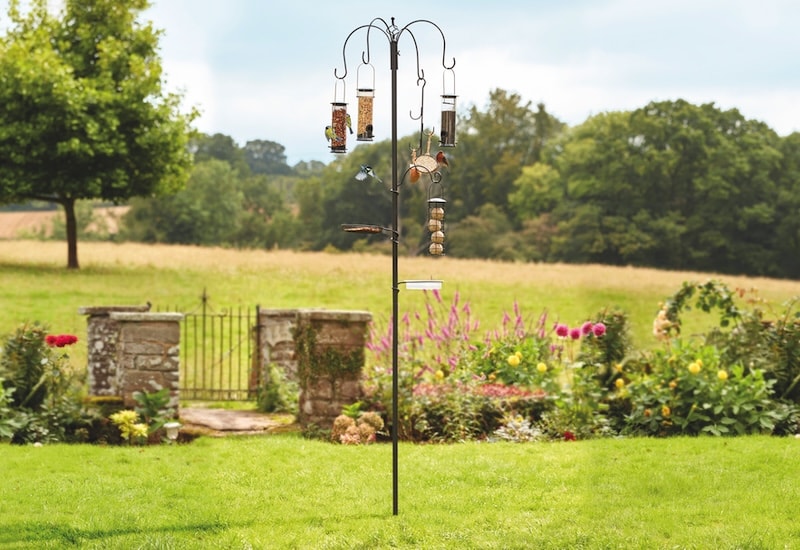
Image: Bird Feeding Station with Four Bird Feeders from Happy Beaks (© T&M)
Keep your feeders and bird baths clean to protect visiting birds. Outbreaks of diseases like Trichomonosis (a parasite affecting finches) and Avian Pox are easily spread at crowded feeding sites.
- Clean Feeders Weekly: Wash feeders and bird baths regularly with a mild, bird-safe disinfectant or hot soapy water. Always wear gloves and wash your hands afterwards.
- Move Feeders Around: Rotate the location of your hanging feeders every few weeks to prevent a buildup of waste and pathogens in one specific patch of ground.
- Keep Food Dry: Wet seed quickly grows mould and dangerous bacteria. Use rain guards over feeders and throw away any soggy seed immediately.
- Act Quickly During Outbreaks: If you see sick birds in your garden, stop feeding and drain bird baths for at least two weeks to allow birds to disperse and prevent further transmission.
RSPB Cleaning Tip: “Water containers should be rinsed out daily and refilled with fresh tap water. Disinfect them weekly and allow to dry out before fresh water is added.”
Find more tips on good bird feeding hygiene here.
How to deter garden predators (cats & birds of prey)
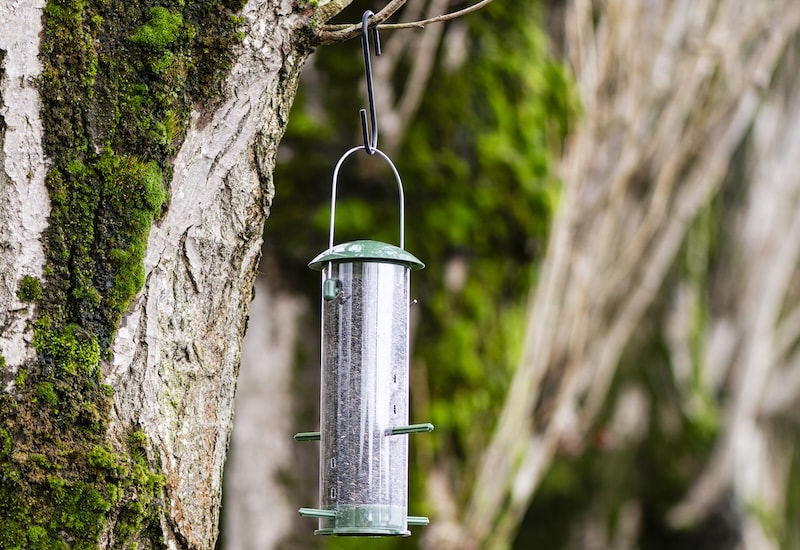
Image: Premium Niger Feeder from Happy Beaks
Feeders make birds vulnerable because they gather in one predictable spot. Domestic cats are one of the biggest threats to garden birds, while natural predators like sparrowhawks may also take advantage of the busy buffet. Here are some quick tips:
- Position Feeders Wisely: Place feeders roughly 2 meters away from thick bushes. This gives small birds enough open space to see an approaching predator, while keeping them close enough to dive into cover if threatened.
- Protect the Base: Avoid placing feeders directly over low shrubs where cats can hide and ambush landing birds.
- Cat Deterrents: If neighborhood cats visit your garden, consider installing quick-release bells on your own cat’s collar, or place prickle-strips around the base of your feeding poles to prevent cats from waiting underneath.
Wildlife Photographer Tip: Nick of @nick_de_cent_wildlife reminds us not to forget about avian predators. He says “feeders should offer birds a clear view of what’s around them so they have the best possible chance of spotting avian predators such as sparrowhawks.”
Find our guide to protecting birds from domestic pets here.
Quick troubleshooting checklist
| Problem | Best Solution | What to Avoid |
| Rats & Mice | Switch to no-mess seeds, sweep ground nightly, use airtight food storage. | Rodent poisons or leaving food out overnight. |
| Squirrels | Weighted feeders, chilli-treated seed, smooth pole baffles. | Greasing poles with oil or Vaseline. |
| Sick Birds | Clean feeders weekly, rotate feeder locations, pause feeding during outbreaks. | Leaving wet, mouldy seed in feeders. |
| Cat Ambushes | Position feeders 2m from cover; clear low hiding spots underneath. | Placing feeders right next to dense ground cover. |
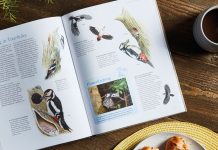
Read our three top tips for feeding birds safely, including recent guidance from the RSPB, for more information. Not sure how to identify the birds that visit your garden? Browse our Garden Bird Library for fascinating facts on 50+ species.